
Most Shield TV owners looking for IPTV run into the same problem: many setup guides are written for Fire TV or generic Android boxes rather than the Shield’s specific setup. This guide covers which apps to install, how to add your playlist, how to set up the EPG, and what to do when something goes wrong.
Jump to: Why Shield is great for IPTV · What you need · Step 1 – Install your app · Step 2 – Add your playlist · Step 3 – EPG setup · App comparison · Troubleshooting · Shield vs other devices · Is IPTV legal? · FAQ
Table of Contents
En bref
- Shield TV runs Android TV. TiviMate, GSE Smart IPTV, and OTT Navigator can be installed directly from Google Play.
- IPTV Smarters Pro is not officially available on Google Play; the official route is to sideload the APK from iptvsmarters.com.
- TiviMate is a popular choice among Shield users because it is designed for TV remotes and has strong EPG support.
- Ethernet can be one of the most effective ways to improve connection stability when buffering is caused by Wi-Fi or network conditions. Shield TV includes Gigabit Ethernet.
- Set your Shield timezone to Europe/London if your EPG times are incorrect during British Summer Time.
- HD streams generally require less bandwidth than 4K streams. Stability is also important, not just the advertised connection speed.
Why Nvidia Shield TV is great for IPTV
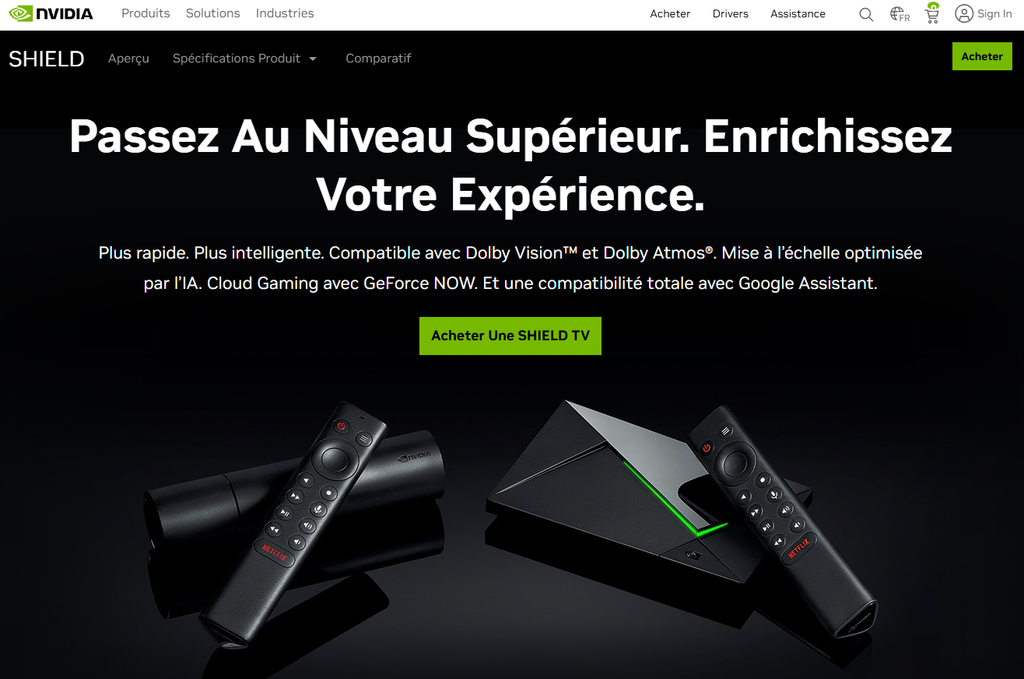
Shield isn’t just another Android box. Several features make it well suited to IPTV:
- Android TV with Google Play Store. Many IPTV player apps can be installed directly without sideloading.
- Tegra X1+ processor. The Shield TV uses NVIDIA’s Tegra X1+ processor, which provides strong performance for streaming and demanding applications.
- Gigabit Ethernet built in. A wired connection can provide a more stable connection than Wi-Fi when the network is the source of interruptions.
- 4K HDR, Dolby Vision, and Dolby Atmos support. Shield supports these formats where the content, application, TV and connection also support them.
- Shield TV Pro: 3 GB RAM and two USB 3.0 ports. The Pro model provides additional memory and USB connectivity for compatible accessories and storage.
- AI upscaling. NVIDIA’s AI-enhanced upscaling can improve supported lower-resolution video, with capabilities depending on the Shield model and video settings.
One thing worth being clear about: Shield’s hardware is strong, but buffering can still come from your IPTV service, internet connection, Wi-Fi interference, or network congestion. The device isn’t always the problem.
What you need before you start
- Nvidia Shield TV or Shield TV Pro
- A broadband connection suitable for the stream quality you want to watch
- An IPTV subscription — your provider will give you either an M3U URL or Xtream Codes credentials
- A compatible IPTV player app
- The Shield remote
M3U vs Xtream Codes – what’s the difference?
M3U is a playlist file or URL containing stream information. Your IPTV app reads the playlist and displays the available streams. If your provider changes the playlist, you may need to reload or refresh it in the app.
Xtream Codes is a login-based method where you normally receive a server URL, username and password. The application connects to the provider’s server and retrieves the available channel information. Categories such as live TV, VOD and series can be provided by the service.
If your provider offers both methods, Xtream Codes can be more convenient because channel and category information can be retrieved directly from the service.
Step 1 – Install your IPTV app
Shield runs Android TV, so several IPTV players can be installed directly from the Google Play Store. IPTV Smarters Pro is different: it is not officially available on Google Play, so the official APK route requires sideloading.
TiviMate setup on Nvidia Shield
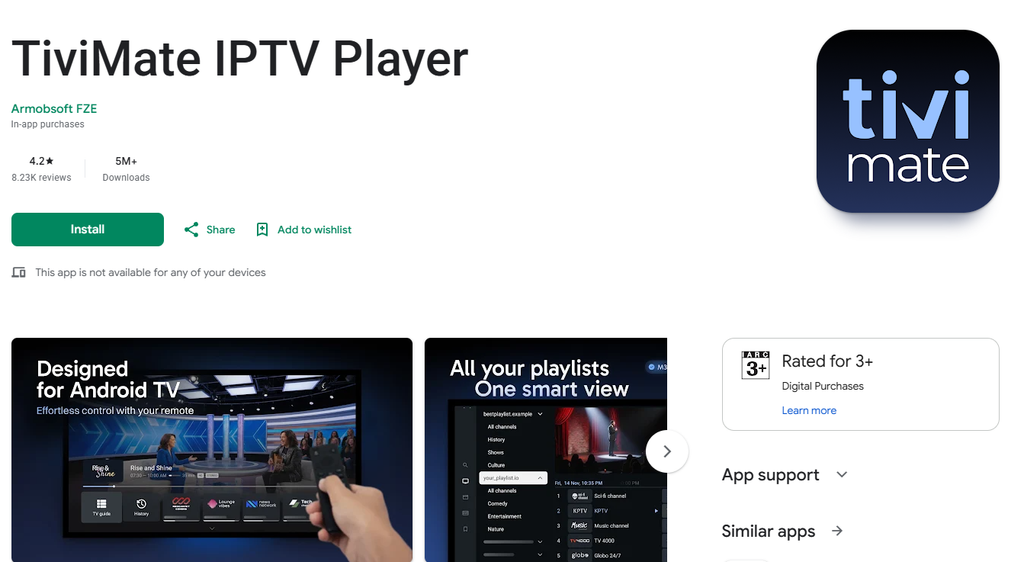
TiviMate is a popular IPTV app among Shield users. It is designed for Android TV and remote navigation and provides extensive EPG functionality.
- Open the Google Play Store on your Shield.
- Search for “TiviMate IPTV Player” and install the appropriate official app.
- Open TiviMate.
- On first launch, select “Add playlist”.
- Choose “M3U playlist” or “Xtream Codes”, depending on what your provider supplied.
- Enter your M3U URL, or enter the server URL, username and password for Xtream Codes.
- Wait for the playlist to load. Large channel lists can take some time.
- Open Live TV to view the available channels and groups.
- Set up the EPG if your provider supplies an EPG/XMLTV URL. The exact menu wording can vary by app version.
Free vs Premium: The free version provides the basic IPTV player functions, while Premium adds features such as multiple playlists, recording, catch-up, multiview and parental controls. TiviMate Premium is activated through the TiviMate Companion app, which handles billing and activation rather than streaming.
IPTV Smarters / Smarters Pro on Nvidia Shield
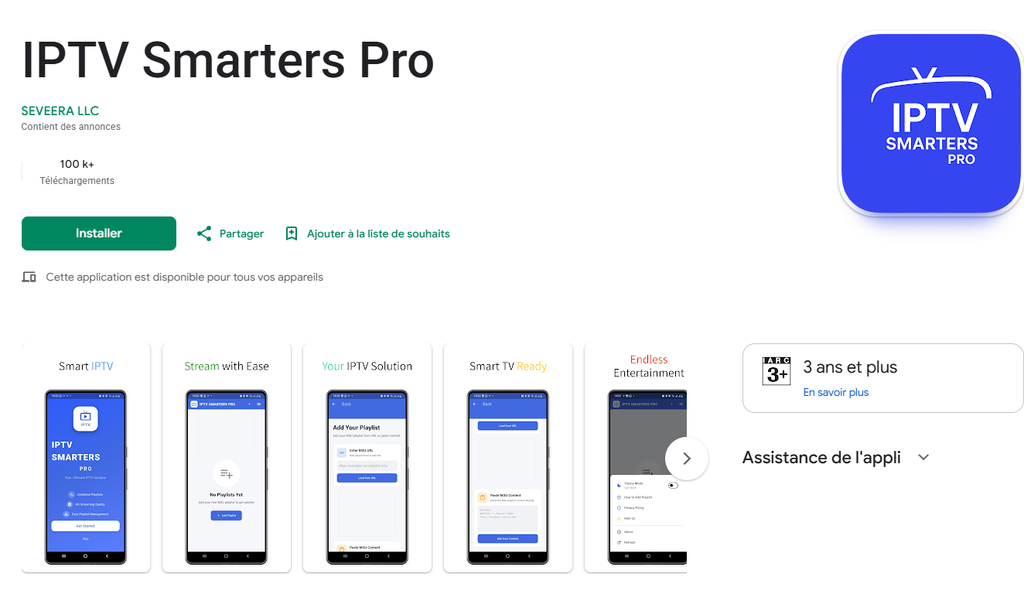
IPTV Smarters Pro is not officially available on Google Play Store. The official download is available through iptvsmarters.com. Multiple apps using similar names may appear elsewhere, so check the source carefully.
To sideload the official APK:
- Go to Shield Settings → Device Preferences → Security & Restrictions and enable “Install unknown apps” for the file manager or Downloader app you intend to use.
- Install the Downloader app from the Play Store.
- Open Downloader and use the APK URL provided by the official IPTV Smarters website, then install the APK.
Once installed: Open the app → Add User → enter the Xtream Codes or M3U details supplied by your IPTV provider.
Smarters can be straightforward for first-time users. Its interface is different from TiviMate, but many IPTV services provide setup instructions for it.
GSE Smart IPTV on Nvidia Shield
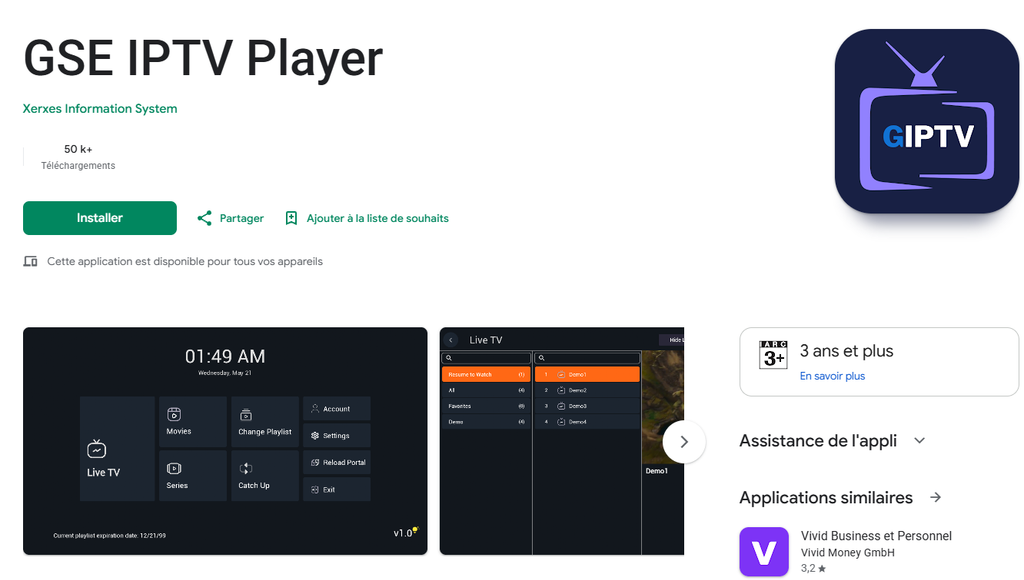
- Available through Google Play Store.
- Supports M3U, Xtream Codes and EPG functions.
- It is an alternative for users looking for multi-screen functionality without relying on TiviMate Premium.
OTT Navigator on Nvidia Shield
- Available through Google Play Store.
- Supports M3U, Xtream Codes, Stalker Portal, EPG, recording, multiview, catch-up and customisable layouts.
- It offers extensive configuration options, although the learning curve can be steeper than simpler IPTV players.
Step 2 – Add your IPTV playlist
Once your app is installed, you need to connect it to your IPTV subscription. You’ll normally use one of two methods.
Adding an M3U playlist
Your provider gives you a URL containing the playlist information. In TiviMate, go to Add Playlist → M3U playlist and paste the URL. In GSE Smart IPTV, use Remote Playlists → Add. In OTT Navigator, use Playlists → Add Playlist → M3U URL.
M3U playlists can change when your provider updates its channel list, so you may need to reload or refresh the playlist in the app.
Adding Xtream Codes credentials
Your provider normally gives you three pieces of information: a server URL, a username, and a password. In TiviMate, choose Add Playlist → Xtream Codes and enter the details.
The application then connects to the provider’s server and retrieves the available channels and categories.
Xtream Codes can be more convenient than a static M3U playlist because channel and category information can be retrieved directly from the provider’s server.
The IPTV players covered here can support M3U and/or Xtream Codes, although exact functionality can vary by application version.
Step 3 – Set up the EPG and organise your channels
EPG, or Electronic Programme Guide, is the on-screen TV guide. It shows what is currently playing and what is scheduled next, similar to the guide on a traditional television service.
Adding an EPG URL in TiviMate
- Go to Settings → EPG.
- Select the option for adding an XMLTV source.
- Paste the XMLTV URL supplied by your provider.
- Refresh the EPG so TiviMate can download the guide data and match it with the available channels.
Not all IPTV providers supply an EPG, so check before subscribing if the electronic programme guide is important to you.
Common EPG problems and fixes
- Wrong XMLTV URL: Check the exact URL supplied by your provider. A single incorrect character can prevent the guide from loading.
- Stale cache: Force an EPG refresh from the application’s EPG settings.
- tvg-id mismatch: If the EPG works for some channels but not others, the channel IDs in the playlist may not match the IDs in the EPG feed. This is usually a provider-side issue.
- Timezone wrong: Set your Shield to Europe/London through Settings → Device Preferences → Date & Time → Time Zone. An incorrect timezone can shift programme times.
- Provider doesn’t supply EPG: Some services do not include programme-guide data. Check before subscribing if EPG support matters to you.
Organising your channels
- Use groups/categories to navigate large channel lists.
- Add your most-watched channels to Favourites for quicker access.
- Hide category groups you never watch to keep the interface easier to navigate.
- TiviMate also allows you to create custom groups for organising channels from different categories.
Best IPTV apps for Nvidia Shield – compared
| App | Google Play | EPG | Recording | Multi-screen | Best for |
|---|---|---|---|---|---|
| TiviMate | Yes — free + Premium | Yes | Premium features | Premium features | Android TV users who want a polished TV interface |
| IPTV Smarters | APK sideload required | Yes | Yes | Yes | Easy setup and provider-recommended configurations |
| GSE Smart IPTV | Yes | Yes | Yes | Yes | Multi-screen use without relying on TiviMate Premium |
| OTT Navigator | Yes | Yes | Yes | Yes | Power users who want extensive configuration and Stalker Portal support |
Community note: TiviMate is frequently recommended in Shield and Android TV communities for IPTV because it is designed around TV remote navigation and provides strong EPG functionality. GSE Smart IPTV and OTT Navigator are alternatives for users who prefer different features or free options.
TiviMate vs IPTV Smarters Pro : lequel choisir ?
Troubleshooting IPTV on Nvidia Shield TV
IPTV buffering on Nvidia Shield
Buffering can have several causes. Work through the following checks before assuming the Shield itself is the problem:
- Switch to Ethernet. Shield has Gigabit Ethernet, so a wired connection can help when Wi-Fi instability is causing interruptions.
- Can’t run a cable? A powerline adapter can provide a wired network connection through your home’s electrical wiring, depending on the property’s electrical setup.
- Weak Wi-Fi: Move closer to the router or try the 5 GHz band when your router and Shield support it.
- VPN: A VPN can add latency. Temporarily testing the connection without it can help identify whether it is contributing to the problem.
- IPv6: Some users report that disabling IPv6 on their router resolves particular connection problems. This should be treated as a troubleshooting step rather than a universal fix.
- IPTV provider overload: If buffering happens mainly during busy periods or live sporting events while other internet services work normally, the provider’s server capacity may be the cause.
- Wrong stream quality: If your provider offers different versions of the same channel, try a lower-resolution stream to see whether the issue improves.
- Increase buffer size in TiviMate: If your TiviMate version provides the setting, go to Settings → Player → Buffer size and increase it. This can help with short network interruptions.
Black screen on a channel
- Expired or invalid playlist: Reload the playlist or re-enter your credentials.
- Provider-side stream issue: Try another channel. If other channels work normally, the issue may be limited to that stream.
- Unsupported codec: Try switching between hardware and software decoding if your IPTV player provides that option.
- Network problem: Check whether the Shield has a stable internet connection.
EPG not loading
- Wrong XMLTV URL — double-check the URL with your provider.
- Stale cache — force a refresh in the app’s EPG settings.
- tvg-id mismatch — this can be a provider-side issue.
- Timezone wrong — set the Shield timezone to Europe/London.
- Provider doesn’t supply EPG — check whether EPG data is included with the service.
App crashes or freezes
- Force-close and reopen the app.
- Restart the Shield.
- Check for app updates in the Play Store.
- Clear the app cache through Settings → Apps → [app name] → Clear Cache.
- Check available storage. The Shield TV has 8 GB of internal storage, while the Shield TV Pro has 16 GB.
- Test a different IPTV player to determine whether the problem is related to the app or the stream.
Nvidia Shield TV vs other Android TV devices for IPTV
Shield isn’t the only Android TV device, and it’s worth being realistic about where it fits.
- Tegra X1+ handles demanding streams and provides strong performance for high-bitrate video.
- Gigabit Ethernet is built in. This can be useful when a stable wired connection is important.
- 3 GB RAM on the Pro gives the Pro model more memory than the standard Shield TV.
- Android TV ecosystem is mature. Shield provides Google Play Store access and broad application compatibility.
- For IPTV-only use, a cheaper device may be sufficient. If your only requirement is watching IPTV channels, you may not need the additional hardware and features of a Shield.
- Shield makes more sense if you’re also using demanding applications such as Plex Media Server, GeForce NOW or other media and gaming services.
For a broader look at IPTV on Android TV devices, see the guide to IPTV on Android TV. If you’re comparing Shield with a smart TV setup, the guide to IPTV on a Smart TV covers the differences.
Is IPTV legal in the UK?
IPTV is a delivery technology that streams video over the internet instead of through traditional aerial or satellite transmission. It is not inherently legal or illegal. What matters is whether the service has the necessary rights or licences for the content it distributes.
Licensed services such as BBC iPlayer, ITVX and Sky Go operate legally. Third-party subscriptions that redistribute copyrighted channels without the necessary rights are different, and using an unlicensed service can create legal and security risks.
For more information, see the dedicated guide: Is IPTV legal in the UK?
Frequently Asked Questions
Can you use IPTV on Nvidia Shield TV?
Yes. Shield runs Android TV, so compatible IPTV player apps can be installed. TiviMate, GSE Smart IPTV and OTT Navigator are available through Google Play, while IPTV Smarters Pro requires an APK sideload.
What is the best IPTV app for Nvidia Shield TV?
TiviMate is a popular choice among Shield users because it is designed for Android TV and remote navigation and provides strong EPG support. Its free version covers the basics, while Premium adds features such as recording, catch-up and multiview. GSE Smart IPTV and OTT Navigator are alternatives if you prefer different features.
How do I install TiviMate on Nvidia Shield?
Open the Google Play Store on your Shield, search for “TiviMate IPTV Player” and install the appropriate app. On first launch, add your playlist using either an M3U URL or Xtream Codes credentials supplied by your IPTV provider.
Does IPTV work with Nvidia Shield TV 4K?
Yes. Shield supports 4K playback when the IPTV stream, application, television and connection support the required format. A stable wired Ethernet connection can also be useful for high-bitrate 4K streams.
Why is IPTV buffering on my Nvidia Shield?
Common causes include unstable Wi-Fi, an overloaded IPTV provider server, network congestion or a VPN adding latency. Testing the Shield over Ethernet is a useful first step. If buffering happens mainly during busy periods while other services work normally, the provider may be responsible.
Wrapping up
Nvidia Shield TV is a strong choice for IPTV in the UK. Its Tegra X1+ hardware, built-in Gigabit Ethernet and Android TV ecosystem make it well suited to IPTV players and other streaming applications.
Actual streaming quality still depends on the IPTV service, your broadband connection and your network configuration. A powerful device cannot compensate for an unstable connection or an unreliable stream source.
For choosing a service, see the guide to IPTV options in the UK.