
Key Takeaways
IPTV technology itself is completely legal in the UK. BBC iPlayer, Sky Go, ITVX, and Netflix all deliver content over the internet using internet protocols. The question of legality hinges on one thing: whether the provider holds the necessary content licences. An unlicensed service streaming Premier League matches without paying for the rights is breaking the law. A licensed platform doing the same thing is not. The technology is neutral. The content rights are everything.
What IPTV Actually Is (and Why the Name Causes Confusion)
IPTV stands for Internet Protocol Television. It simply describes how content is delivered over an internet connection rather than through a traditional aerial, satellite dish, or cable connection. That’s it. There’s nothing inherently dodgy about the technology itself.
BBC iPlayer, ITVX, Channel 4, Sky Go, NOW, Netflix, Disney+, and Amazon Prime Video all deliver video over internet protocols. Many are not marketed specifically as “IPTV” services, but the underlying delivery method is internet-based.
The confusion arises because “IPTV” has become shorthand in popular usage for something quite different: cheap, unofficial subscription services offering thousands of channels and on-demand content without holding the rights to any of it. When someone asks “is IPTV illegal in the UK?”, they usually mean these unlicensed services – not BBC iPlayer.
That linguistic blurring matters, because it leads people to think the technology itself is suspect. It isn’t. What matters is whether the provider has the rights to distribute the content it’s streaming.
When IPTV Is Completely Legal in the UK
An IPTV service that holds the appropriate broadcasting and content licences is operating within the law. In the UK, that includes a long list of well-known platforms:
Free services:
- BBC iPlayer
- ITVX
- Channel 4
- Channel 5 (My5)
- Pluto TV
- TVPlayer (free tier)
Subscription services:
- Sky Go and NOW
- Amazon Prime Video
- Disney+
- Apple TV+
- BritBox
- DAZN (sports)
What “licensed” means in practice is straightforward: the broadcaster or platform has obtained the rights to distribute specific content to UK viewers. Sky, for example, holds Premier League broadcasting rights. That is what makes its authorised services lawful, while an unlicensed service offering the same premium channels without the necessary rights is not.
Beyond the major platforms, legitimate licensed IPTV subscription services do exist – smaller providers that have secured rights for specific content. The key is always verifying the licensing, not assuming legality based on price or channel count.
Before choosing a provider, you can also compare the main options in our IPTV subscription UK guide.
When IPTV Becomes Illegal
Selling or Distributing Unlicensed Streams
This is where serious criminal law enters the picture. Selling, distributing, or commercially supplying unlicensed streams can amount to criminal copyright offences under the Copyright, Designs and Patents Act 1988 (CDPA), as amended by later legislation including the Digital Economy Act 2017.
Section 107 of the CDPA covers a range of criminal copyright offences involving infringing copies and, in certain circumstances, communicating copyright works to the public for commercial gain or where loss is intended or foreseeable. Some offences can carry a maximum sentence of 10 years’ imprisonment and/or a fine on conviction on indictment.
The courts are continuing to use these powers. Two cases from August 2026 illustrate where enforcement is focused:
- Craig Austin, 38, of Whiston, Merseyside was sentenced in August 2026 to 32 months’ imprisonment, suspended for three years, plus 150 hours of unpaid community service. Austin ran a service called Ozzy Streams and made about £205,000 from the operation between January 2020 and August 2025. He pleaded guilty to three counts of making or supplying an article for use in fraud and one count of acquiring, using, or possessing criminal property.
Earlier in 2026, Operation Eider formed part of a wider FACT-led enforcement campaign against illegal streaming operations. In Merseyside, police made arrests connected with suspected illegal IPTV supply, while FACT reported further cases across UK regions.
FACT (the Federation Against Copyright Theft) and PIPCU’s enforcement focus is clear: operators, resellers, and commercial distributors are major targets. If you’re running a service, selling subscriptions, or reselling access, the legal exposure is substantially greater than that faced by an ordinary viewer.
Watching Unlicensed Streams as an End User
The legal position for viewers – people who simply subscribe to and watch an unlicensed service – is more nuanced, and it’s worth being precise here rather than either alarming or reassuring.
Section 20 of the CDPA restricts the communication of copyright works to the public by electronic transmission. That provision is particularly relevant to those who communicate protected works to the public without permission.
There is also growing evidence of enforcement efforts involving customers, although an important example often cited in this context occurred in Ireland, not the UK. In March 2026, Sky obtained a Norwich Pharmacal Order in the Irish High Court compelling Revolut to disclose the names and addresses of 304 subscribers and 10 resellers connected with an illegal IPTV service called “IPTV is Easy”. The order was intended to obtain information that could support legal proceedings against resellers and some end users.
For the UK specifically, FACT has also taken steps aimed at viewers. In late 2025, it reported issuing more than 1,000 warning letters to people suspected of using illegal streaming services following a police-backed investigation.
In November 2025, Operation Eider also identified 14 cases across UK regions including London, the South West, North West, North East, Scotland, Wales, Yorkshire and the West Midlands. Some individuals received cease-and-desist notices as part of the enforcement activity.
On the criminal side, the picture is clearer. DCI Emma Warbey, head of PIPCU, told the Financial Times in April 2024 that individuals using illegal streams were “largely without risk of arrest” compared with the organised operators targeted by enforcement. She stressed that police focus heavily on the larger organised crime groups and networks.
The honest summary: Criminal prosecution of passive end users appears far less common than enforcement against operators and suppliers. At the same time, warning letters and information-gathering actions show that viewers should not assume that using an unlicensed service is entirely without risk. These are different forms of enforcement, and conflating them distorts the picture in either direction.
Are IPTV Boxes and Fire Sticks Illegal?
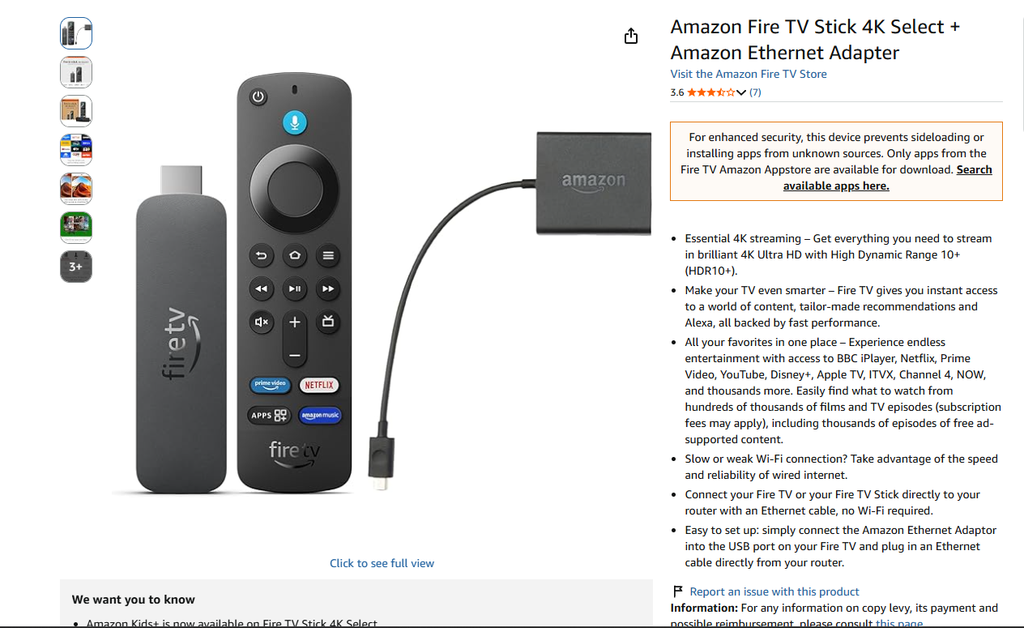
The short answer: the device itself is not illegal. A Fire TV Stick, an Android TV box, or any similar streaming device is a perfectly legal piece of hardware. You can buy one from Amazon, Currys, or Argos without any legal concern.
What can make a device legally problematic is what’s installed on it and how it is used.
A “fully loaded” or “jailbroken” Fire Stick – one that’s been modified to run apps giving access to unlicensed streams – is a different matter. The hardware itself is not the issue. The problem is the unauthorised access to protected content and, in commercial cases, the supply or promotion of systems designed to facilitate infringement.
In October 2025, Amazon introduced changes to its Fire TV range that made sideloading certain Android applications more difficult on its newer Vega OS-based hardware. The move attracted significant attention in the context of illegal streaming and piracy.
The GOV.UK guidance on illicit streaming devices also warns against purchasing pre-loaded illegal streaming devices. The issue is not the existence of the box itself, but the software and services that enable access to infringing content.
For those supplying modified devices commercially, the legal exposure can be significant. Depending on the circumstances, offences under the Fraud Act 2006 and the CDPA may apply.
The IPTV box legal question, then, is really a question about what’s installed on it and what the device is being used to access – not what the hardware is called.
For installation and setup information, see our IPTV Firestick UK guide.
How UK Copyright Law Applies to IPTV
The primary legislation is the Copyright, Designs and Patents Act 1988 (CDPA). It has been amended several times, but several provisions are particularly relevant to IPTV and online streaming:
- Section 20 – restricts communication of copyright works to the public by electronic transmission. This is highly relevant to unauthorised online streaming.
- Section 107 – contains criminal offences relating to infringing copies and certain commercial copyright infringements. Some offences under the section carry maximum penalties of up to 10 years on indictment.
- Section 97A – allows the High Court to order ISPs to block access to websites or other locations used to infringe copyright. The Premier League has used live blocking orders during match broadcasts to target unauthorised streams.
- Section 296ZA – addresses the circumvention of effective technological protection measures applied to certain copyright works.
IPTV can also be used directly on compatible televisions. Our IPTV for Smart TV UK guide explains how the apps and services work on supported Smart TVs.
The Digital Economy Act 2017 strengthened the penalties for certain online copyright offences by increasing relevant maximum sentences from two years to ten years.
The Fraud Act 2006 may also apply where illicit streaming devices or services are commercially supplied in circumstances involving fraud.
For civil claims, the Intellectual Property Enterprise Court (IPEC) provides a specialist forum for intellectual property disputes. Claims in IPEC can involve substantial damages, subject to the applicable procedure and rules.
How to Tell Whether an IPTV Service Is Legitimate
If you’re considering an IPTV subscription and you’re not sure whether it’s legal, run through this checklist:
- Does it have a UK company registration or a clear, verifiable legal entity? A real company identity makes the provider easier to verify. Check Companies House where appropriate.
Keep in mind that an IPTV player is separate from the service supplying the content. Our IPTV for Android UK guide explains how IPTV apps and subscriptions work together on Android devices.
Red flags to watch for:
- Prices of £5-10/month for thousands of channels
- No company name or registered address
- Payment accepted only via cryptocurrency
- No refund policy or consumer rights information
- Service is only accessible via a third-party APK download rather than an official app store
Once you know what to look for, our Best IPTV UK guide can help you compare the available options.
Common Myths About IPTV and the Law
Myth 1: “IPTV is illegal.” False. IPTV is a delivery technology. BBC iPlayer and other legitimate streaming platforms use internet-based delivery. The technology is neutral. Unlicensed content distribution is illegal – the technology that carries it is not.
Myth 2: “Watching IPTV can get you arrested.” Misleading. Criminal enforcement has historically focused much more heavily on operators, suppliers and resellers than ordinary viewers. PIPCU’s public comments have emphasised the focus on larger organised crime groups. Civil enforcement and warning campaigns are a different issue, and viewers should not assume that there is no legal risk at all.
Myth 3: “A VPN makes illegal IPTV legal.” Definitively false. A VPN changes your apparent IP address. It does not give an unlicensed service permission to distribute copyrighted content. The legal status of the stream does not change simply because a VPN is being used.
Myth 4: “If the service disappears, I’m safe.” Not necessarily. Payment records and transaction data can persist after a service shuts down. The March 2026 Irish Revolut case demonstrated that financial records can potentially be used to identify subscribers connected to an illegal streaming operation.
Myth 5: “The Fire Stick is the problem.” The device itself is legal. What you install on it and what you use it to access determines the legal issue. An unmodified Fire Stick running BBC iPlayer and Netflix is lawful. The same device used to access unauthorised streams is a different matter.
The Real Risks of Using Unlicensed IPTV Services
Setting aside the legal question for a moment, there are practical risks that are often underweighted:
Legal risk (enforcement is evolving). Warning letters, information-gathering orders and potential civil claims show that the risks are not limited to operators. FACT reported issuing more than 1,000 warnings in late 2025, while an Irish High Court order in 2026 required Revolut to disclose information relating to 304 subscribers connected to an illegal IPTV service.
Financial fraud. BeStreamWise research found that 39% of illegal streamers surveyed had suffered financial losses after being targeted by criminals, with an average reported loss of £1,680.
Malware and security risks. Unlicensed IPTV apps and APK files obtained outside trusted app stores can expose users to malware, malicious advertising, phishing attempts and other security threats. BeStreamWise’s research also found high levels of security scares among people who had accessed illegal content.
Service instability. Unlicensed services can disappear without warning. When they do, there’s often no reliable refund process, no formal customer support, and no consumer recourse.
Funding organised crime. UK law-enforcement investigations have linked some illegal IPTV operations to organised criminal activity. The money paid for an illegal subscription can therefore go far beyond the streaming business itself.
Legal IPTV Options in the UK

The good news is that the UK has a strong range of genuinely legal internet-based TV and streaming options – many of them free.
Free (no subscription required):
- BBC iPlayer – live and on-demand; a TV Licence is required to watch or record live television and to use BBC iPlayer.
- ITVX – free tier with adverts
- Channel 4 – full catch-up and selected live content
- My5 (Channel 5)
- Pluto TV – free live channels and on-demand content
- TVPlayer – free tier with a range of live channels
Subscription:
- NOW – Sky content without a traditional Sky contract
- Sky Go – included with eligible Sky TV subscriptions
- Amazon Prime Video – included with Prime
- Disney+
- Apple TV+
- BritBox – British archive content
- DAZN – sports-focused streaming service
All of these use internet-based streaming technology. They’re just licensed services. Current prices and packages vary, so it is better to check the provider’s own website for the latest offer.
Beyond the major platforms, licensed IPTV subscription services do exist that offer broader channel packages – the critical step is verifying that any service you consider holds the rights for the content it provides, not just taking its word for it.
Once you’ve checked the provider’s information, a free IPTV trial UK can be useful for testing compatibility and playback before committing to a longer subscription.
Frequently Asked Questions
Is IPTV legal in the UK?
Yes – IPTV technology itself is completely legal. BBC iPlayer, Sky Go, Netflix and many other streaming platforms use internet-based delivery. The legality of any specific service depends on whether the provider holds the necessary rights or licences for the content it distributes. Licensed services are legal; unauthorised services are not.
Is watching IPTV illegal in the UK?
Watching a licensed IPTV or streaming service is entirely legal. Watching an unlicensed service creates a more complicated legal position. Criminal enforcement has focused primarily on operators and suppliers, while warning letters and other civil enforcement measures show that viewers should not assume there is zero legal risk.
Can you get arrested for using IPTV in the UK?
Arrest and prosecution of ordinary viewers appear to be far less common than enforcement against operators and resellers. PIPCU has publicly described its focus as being on larger organised crime groups and networks. That does not mean every form of liability for viewers is impossible, particularly where a person’s conduct goes beyond simply receiving a stream.
Is a Fire Stick IPTV illegal?
No. The Fire TV Stick is a legal device. What determines the legal issue is what is installed on it and what content it is used to access. A Fire Stick running BBC iPlayer and Disney+ is perfectly lawful. A device configured to access unauthorised streams is a different matter.
How do I know if an IPTV service is legal?
Check for a real company identity, transparent business information, clear details about the content offered, proper terms and privacy information, and a credible support channel. Be especially cautious about services promising thousands of premium channels for a few pounds a month. An official app-store presence can be a useful signal, but it is not proof by itself that every channel or programme is licensed.
Does a VPN make IPTV legal?
No. A VPN changes your apparent IP address, but it does not change whether an IPTV provider has the rights to distribute the content. IPTV legality is determined by the content and the provider’s rights, not by whether a VPN is being used.
What happens if I get caught using illegal IPTV?
There is no single outcome. For viewers, a warning letter or other contact from a rights holder or anti-piracy organisation is one possible response. Civil action is also possible in appropriate cases. Criminal prosecution of ordinary passive viewers appears much less common than prosecution of operators and suppliers, but the circumstances matter and there is no blanket guarantee that a viewer cannot face legal consequences.
Are IPTV subscriptions legal in the UK?
An IPTV subscription is legal when the provider has the necessary rights for the content it delivers. Sky, NOW, Amazon Prime Video and similar legitimate services are examples of licensed subscription platforms. An unlicensed subscription does not become lawful simply because it is marketed as an IPTV package.